


Approach
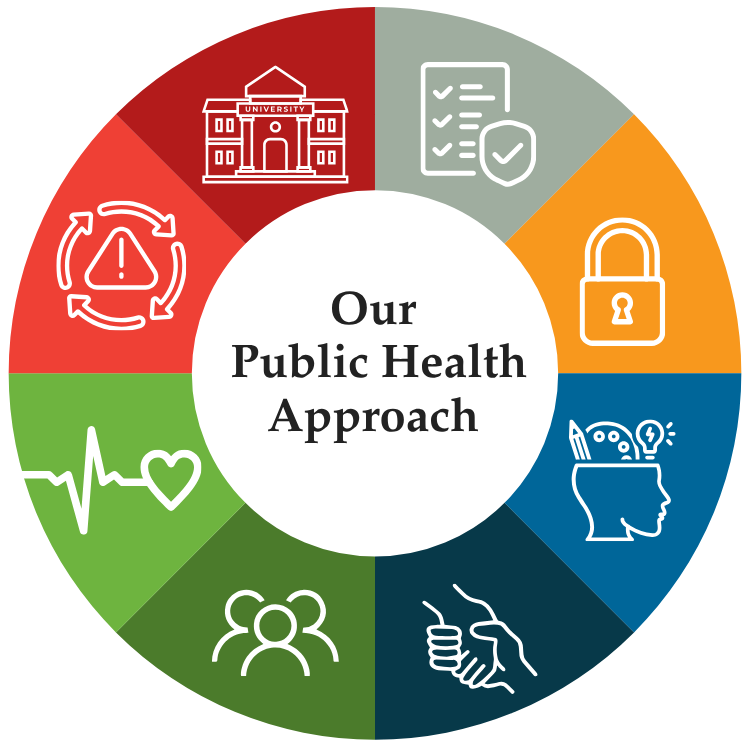
Cornell recognizes sexual violence and related misconduct—including dating violence, domestic violence, sexual harassment, and stalking—as serious public health issues that can cause significant harm to individuals and communities and contribute to a climate of hostility and fear that is antithetical to the university’s learning mission.
Sexual violence and related misconduct are shaped by factors at the individual, relationship, community, institutional, and societal levels. Effective prevention and response therefore require a comprehensive, coordinated approach that combines education, supportive services, policies, environmental strategies, and accountability. Addressing the distinct needs of students, staff, and faculty also requires collaboration across university departments, student organizations, faculty, and other members of the Cornell community.
This page highlights key strategies, services, programs, policies, and other initiatives through which Cornell works collectively to prevent and respond to sexual violence and related misconduct.
Institutional leadership for culture change | Policy & practice initiatives | Assessment of environmental risks & protective factors | Education & skills for well-being | Help-seeking & reporting | Identification of people in need of care | Timely & equitable access to support & clinical care | Coordinated incident response & accountability
Cornell Health's Skorton Center for Health Initiatives provides leadership for the university’s sexual violence prevention efforts, advancing student health and well-being through research-informed public health strategies, education, and programming.
Examples of key efforts:

- Active and visible leadership: The Coalition on Sexual Violence Prevention guides campus-wide prevention and response strategies through collaboration among university leaders, faculty, staff, and students.
- Biennial data collection and analysis: Cornell’s Sexual Violence and Related Misconduct (SARM) surveys monitor trends, inform prevention efforts, and meet New York State requirements.
Health Promoting Campus alignment: Cornell advances a whole-campus approach to safety, belonging, healthy relationships, and gender equity, recognizing that preventing sexual violence requires coordinated action across the university. - Incident tracking: Cornell Office of Civil Rights and the Clery Act Compliance Office monitor reports of sexual misconduct, identify trends, and inform institutional oversight and prevention efforts. The Annual Security Report, published annually in accordance with the Clery Act, provides crime statistics, policy statements, prevention information, and resources related to sexual assault, dating violence, domestic violence, and stalking.
- Public Safety Advisory Committee (PSAC): This committee makes recommendations to improve campus security policies and procedures and reviews issues that affect the overall safety and well-being of Cornell’s diverse community.

- Cornell University Policy 6.4: Establishes Cornell’s expectations and procedures for preventing, reporting, investigating, and responding to prohibited bias, discrimination, harassment, sexual assault, dating violence, domestic violence, stalking, sexual exploitation, and other forms of sexual and related misconduct.
- Student Code of Conduct:: Defines behavioral expectations for students and recognized student organizations and outlines the university’s student conduct process to promote accountability, safety, and a respectful learning environment.
Cornell Office of Civil Rights: Oversees implementation of Policy 6.4, coordinates the university’s response to reports of prohibited conduct, and ensures compliance with state and federal laws, including Title IX. - Health Promoting Campus Community of Practice: Committees develop guidance to promote health and well-being in all university policies and practices.

- Safer campus environments: Public Safety and Risk Management support environmental strategies—including Blue Light emergency phones, the Rave Guardian app, safety escorts, campus key card access, campus Crime Alerts, signage, and ongoing assessment of campus safety concerns—to reduce risk and promote community well-being.
- Crime prevention and safety planning: The Division of Public Safety provides crime prevention education, security assessments, and individualized safety planning for students, employees, and campus departments.
- Safer social environments: The Office of Sorority and Fraternity Life oversees implementation of the Social Event Policy. Similarly, the Campus Activities Office manages the Big Red Guidebook for all registered student organizations. Both offices work with self-governed student groups engaging in event planning to reduce risk.
- Campus partnerships: Collaboration with academic and student life units integrate sexual violence prevention into curricula, residential education, and new student programming

- Campus partnerships: Collaboration with academic and student life units integrate sexual violence prevention (e.g., Sexual Citizens content) into curricula, residential education, and new student programming.
- Evidence-informed prevention: The SHARE Office at Cornell Health leads theory- and data-informed initiatives that promote healthy relationships, consent, bystander engagement, and positive social norms, and strive to promote culture change. Signature programs include Intervene, Enhanced Assess, Acknowledge, Act (EAAA), and Actively Modeling Positive Masculinity (AM/PM) Project.
- Inclusive educational opportunities: Programs are culturally responsive, inclusive of diverse identities and experiences, and informed by the socioecological model, addressing individual, relationship, community, and environmental factors that influence sexual violence.
- Education across the student experience: Prevention education is integrated throughout the student experience through New Student Orientation, Housing & Residential Life programming, the Centers for Student Equity, Empowerment & Belonging, student organizations, and campus partnerships.
- Communications and online resources: University websites (e.g., SHARE.cornell.edu), digital communications, and print materials provide information about healthy relationships, consent, reporting options, campus policies, confidential resources, and support services.
- Faculty and staff education: Annual education is provided on responding to disclosures, understanding reporting responsibilities, and connecting students and colleagues with appropriate resources.

- Cornell’s Sexual Harassment & Assault—Response & Education (SHARE) website: Central online resource providing information about helping a friend, confidential support, medical and counseling services, reporting options, and campus and community resources.
- Cornell Office of Civil Rights: Provides information about reporting options, supportive measures, and remedies under Policy 6.4 and Title IX, and coordinates the university’s response to reports of prohibited conduct.
- Division of Public Safety: Through Cornell University Police, Public Safety Communications, and the Community Response Team, provides emergency response, investigations, law enforcement, and crisis response.

- Trained responders: Individuals in key roles receive annual training to recognize concerns, respond appropriately to disclosures, and connect students with resources, including:
- Residential student and professional staff
- Athletic coaches, and athletics staff
- Cornell University Police (CUPD) crime prevention. Officers can provide safety assessments and help develop safety plans as needed.

- Cornell Health: Medical, counseling, disability, and survivor support services provide coordinated care for students affected by sexual assault, dating violence, domestic violence, and related misconduct.
- Victim/Survivor Advocates provide confidential, trauma-informed, client-centered support, information, academic assistance, safety planning, resource referrals, and reporting options while collaborating with campus partners to meet survivors’ needs.
- Community collaboration: Campus services and local agencies (e.g., the Advocacy Center of Tompkins County and Cayuga Medical Center (CMC)’s Sexual Assault Forensic Exam Program) provide coordinated care and services. CMC’s Emergency Department treats individuals seeking care after sexual assault or domestic violence. Trained medical providers are available to collect forensic evidence as needed.
- Public Safety Communications Center: Dispatchers enlist the Administrator On Call to coordinate the university’s response to crises requiring after-hours attention.

- Consistent enforcement of laws & policies: Cornell University Police, the Cornell Office of Civil Rights, and the Office of Student Conduct and Community Standards collaborate with local law enforcement partners to investigate reports, enforce university policies and applicable laws, and promote accountability.
More information
Questions about this content may be directed to the Skorton Center for Health Initiatives at skortoncenter@cornell.edu.